Kido's existential anxiety
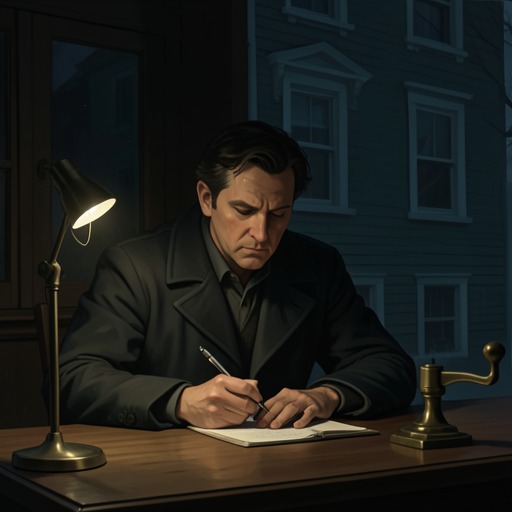
A ManKido’s existential anxiety is the renewed fear of death and uncertainty about the meaning of his life that follows a friend’s early death and returns him to questions he had thought resolved. Mortality changes the terms of his self-examination: rather than asking who he might become, he wonders whether the life he has already lived was rightly chosen, and what will remain of him in his son’s memory. The crisis also brings his private fear into contact with the Great East Japan Earthquake and the threat of anti-Korean violence, exposing how fragile the ordinary legal order can seem.
The return of mortality
At a funeral for a friend who had been a fellow legal apprentice in Kyoto, Kido is struck by the difference between the quiet deaths of older acquaintances and the loss of someone who, in his view, should have had much more life ahead. The friend’s wife and two young daughters weep through the ceremony; Kido regrets that he cannot offer them meaningful words of condolence. His friend’s death, which once seemed almost impossible to believe, turns the question toward Kido himself: what would happen if he died, and how would his son respond to the news?
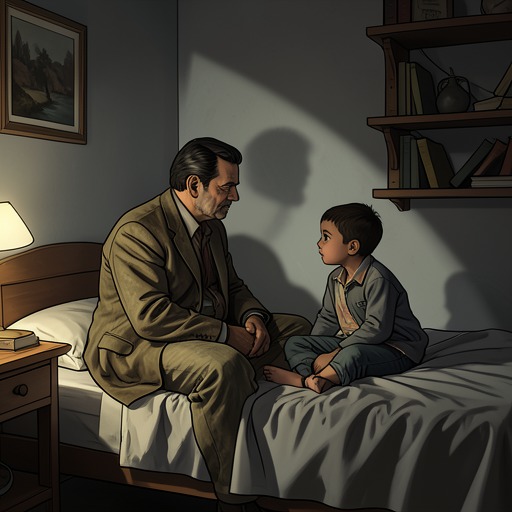
Kido imagines Sota asking whether his father is dead, and recognizes that he would not be there to explain death to him. The thought gives sharp form to a fear he has struggled to name since the earthquake: he does not want to die, and feels that he simply cannot. Death means not merely losing a future but the end of consciousness itself. The instant he dies, he would no longer think or feel; time would continue for the living without any connection to him. The more than fifteen thousand people killed in the tsunami, he reflects, cannot perceive the present or participate in it. Their absence makes him painfully attentive to the small facts of being alive.
From career doubts to a question about the past
This is not Kido’s first encounter with uncertainty. As a teenager, while trying to decide what kind of person he wanted to become, he questioned who he was. He eventually drifted into law on his father’s advice and tried to believe that his chosen profession would bring the person he was meant to be into being. For fifteen years, he treated those youthful doubts as a developmental stage he had passed through. His work had given him a stable route to self-realization, a privilege he knew many clients lacked as they faced insecure work and social standing.
After the earthquake, that settled story no longer reassures him. He cannot clearly say what he had found through his earlier questioning, and the old question returns in a changed form: not simply who he is, but whether he made the right choice. At thirty-eight, Kido imagines his life as a succession of stages joined by the name Akira Kido, with the present self as their culmination. Much of the life that once lay ahead is already past, and the person he has been is therefore largely determined. He now seeks not an answer that will help him begin living, but one that might help him understand what sort of person to die as.
Sota, memory, and the uncertain future
Kido’s fear becomes personal through the possibility of vanishing from Sota’s future. He wonders whether he will still be alive when his son is thirty-eight, the age Kido is now; that point lies thirty-three years ahead, when Kido would be seventy-one. Even if he survives into old age, he could be killed sooner by another disaster. He imagines a Nankai Trough earthquake sending a bullet train off its track, leaving him to die without warning. The danger has been discussed so repeatedly since the quake that it is part of ordinary life, yet for Kido it gives sudden force to the uncertainty of whether he will be present in his son’s memory.
The question of what Sota might remember parallels the way Kido now regards his own past. A name can link different stages of a life, but it cannot guarantee that the person named will continue to exist or control how others remember him. Kido’s anxiety is thus not only fear of dying: it is also apprehension about leaving behind a version of himself that he cannot explain, revise, or inhabit.
Public danger and physical crisis
Kido’s renewed mortality anxiety coincides with two further worries: the return of the massacre of Koreans to cultural memory and the xenophobic demonstrations of the previous year. His work as a lawyer depends on a judicial order that protects the rights and citizenship of him and his family. He imagines how easily that order might be overridden in a limited place and time. Anti-Korean slogans and the circulation of false news make the threat concrete: legal safeguards and careful reasoning may count for little to people stirred into violence.
The recognition overwhelms him during a train ride. The lights seem to flare into a dark reddish haze, and he feels pressed in from all sides. He lowers his head, closes his eyes, removes his glasses, rubs his face, and braces his feet against the floor. A nearby passenger watches him discreetly. Kido loosens his necktie and reclines, and the discomfort begins to ease only after he takes deep, slow breaths. The episode gives bodily force to a fear that had until then remained an argument in his mind.
Reassurance, family, and the limits of consolation
During the episode, Kido recalls Rié telling him that he is a good person and wonders whether her testimony would protect him if he were accused of being a spy or challenged by a test of speech of the kind used during the massacre of Koreans. He cannot know whether someone bent on killing him would listen, or whether hostility would extend to Rié as well. Her reassurance matters to him, but it cannot secure him against violence or death; the question exposes the distance between individual affection and the force of collective hatred.
The broader family narrative gives Kido’s reflections a counterpoint in Yuto’s insistence that he remain Taniguchi even when Rié returns to her maiden name. Yuto fears that changing his surname will further erase the father he loved, whose ashes remain in an urn and whose family, he says, turned their backs on him. Elsewhere, Yuto offers to care for goldfish after seeing his grandmother look at the aquarium, and Rié recognizes how much grief he bears while quietly looking after Hana. These moments do not answer Kido’s questions about death, but they show how the living preserve attachment through names, care, and acts of remembrance.
That work of memory also appears in Yuto’s reading and poetry. Rié is moved by his response to a story about a boy separated from his father, especially because he had read it before she revealed that the man he knew as his father was not Daisuké Taniguchi. Later, Yuto explains a poem through the image of an abandoned cicada shell on the cherry tree in Burial Mound Park: he imagined the shell hearing the cicada’s voice after the body had left it. Rié sees in the poem an unspoken way of confronting the deaths of his brother and father, and recognizes that literature offers him a means of coping she could not have prescribed. Against Kido’s fear that death severs a person from the present, these scenes show remembrance continuing through the interpretations and forms of expression the living make for one another.